
vendredi 3 avril 2020

‘Lean On Me,’ ‘Lovely Day’ singer Bill Withers dies at 81

BillWithers.com – The Official Site of Bill Withers Music
Bill Withers on Wikipedia
Bill Withers, who wrote and sang a string of soulful songs in the 1970s that have stood the test of time, including “ Lean on Me, ” “Lovely Day” and “Ain’t No Sunshine,” has died from heart complications, his family said in a statement to The Associated Press. He was 81.
The three-time Grammy Award winner, who withdrew from making music in the mid-1980s, died on Monday in Los Angeles, the statement said. His death comes as the public has drawn inspiration from his music during the coronavirus pandemic, with health care workers, choirs, artists and more posting their own renditions on “Lean on Me” to help get through the difficult times.
“We are devastated by the loss of our beloved, devoted husband and father. A solitary man with a heart driven to connect to the world at large, with his poetry and music, he spoke honestly to people and connected them to each other,” the family statement read. “As private a life as he lived close to intimate family and friends, his music forever belongs to the world. In this difficult time, we pray his music offers comfort and entertainment as fans hold tight to loved ones.”
Withers’ songs during his brief career have become the soundtracks of countless engagements, weddings and backyard parties. They have powerful melodies and perfect grooves melded with a smooth voice that conveys honesty and complex emotions without vocal acrobatics.
“Lean on Me,” a paean to friendship, was performed at the inaugurations of both Barack Obama and Bill Clinton. “Ain’t No Sunshine” and “Lean on Me” are among Rolling Stone’s list of the 500 Greatest Songs of All Time.
“He’s the last African-American Everyman,” musician and band leader Questlove told Rolling Stone in 2015. “Bill Withers is the closest thing black people have to a Bruce Springsteen.”
His death caused a torrent of appreciation on social media, including from former Obama adviser Valerie Jarrett, who said Withers’ music has been a cherished part of her life. “It added to my joy in the good times, and also gave me comfort and inspiration when I needed it most,” she tweeted. Singer José James said “we need his message of unity now more than ever” and Billy Dee Williams tweeted “your music cheered my heart and soothed my soul.”
“We lost a giant of songwriting today,” ASCAP President and Chairman Paul Williams said in a statement. “Bill Withers’ songs are among the most treasured and profound in the American songbook — universal in the way they touch people all over the world, transcending genre and generation. He was a beautiful man with a stunning sense of humor and a gift for truth.”
Withers, who overcame a childhood stutter, was born the last of six children in the coal mining town of Slab Fork, West Virginia. After his parents divorced when he was 3, Withers was raised by his mother’s family in nearby Beckley.
He joined the Navy at 17 and spent nine years in the service as an aircraft mechanic installing toilets. After his discharge, he moved to Los Angeles, worked at an aircraft parts factory, bought a guitar at a pawn shop and recorded demos of his tunes in hopes of landing a recording contract.
In 1971, signed to Sussex Records, he put out his first album, “Just As I Am,” with the legendary Booker T. Jones at the helm. It had the hits “Grandma’s Hands” and “Ain’t No Sunshine,” which was inspired by the Jack Lemmon film “Days of Wine and Roses.” He was photographed on the cover, smiling and holding his lunch pail.
“Ain’t No Sunshine” was originally released as the B-side of his debut single, “Harlem.” But radio DJs flipped the disc and the song climbed to No. 3 on the Billboard charts and spent a total of 16 weeks in the top 40.
Withers went on to generate more hits a year later with the inspirational “Lean on Me,” the menacing “Who Is He (and What Is He to You)” and the slinky “Use Me” on his second album, “Still Bill.”
Bill Withers, who wrote and sang a string of soulful songs in the 1970s that have stood the test of time, including “ Lean on Me, ” “Lovely Day” and “Ain’t No Sunshine,” has died from heart complications, his family said in a statement to The Associated Press. He was 81.
The three-time Grammy Award winner, who withdrew from making music in the mid-1980s, died on Monday in Los Angeles, the statement said. His death comes as the public has drawn inspiration from his music during the coronavirus pandemic, with health care workers, choirs, artists and more posting their own renditions on “Lean on Me” to help get through the difficult times.
ADVERTISEMENT
“We are devastated by the loss of our beloved, devoted husband and father. A solitary man with a heart driven to connect to the world at large, with his poetry and music, he spoke honestly to people and connected them to each other,” the family statement read. “As private a life as he lived close to intimate family and friends, his music forever belongs to the world. In this difficult time, we pray his music offers comfort and entertainment as fans hold tight to loved ones.”
Withers’ songs during his brief career have become the soundtracks of countless engagements, weddings and backyard parties. They have powerful melodies and perfect grooves melded with a smooth voice that conveys honesty and complex emotions without vocal acrobatics.
“Lean on Me,” a paean to friendship, was performed at the inaugurations of both Barack Obama and Bill Clinton. “Ain’t No Sunshine” and “Lean on Me” are among Rolling Stone’s list of the 500 Greatest Songs of All Time.
“He’s the last African-American Everyman,” musician and band leader Questlove told Rolling Stone in 2015. “Bill Withers is the closest thing black people have to a Bruce Springsteen.”
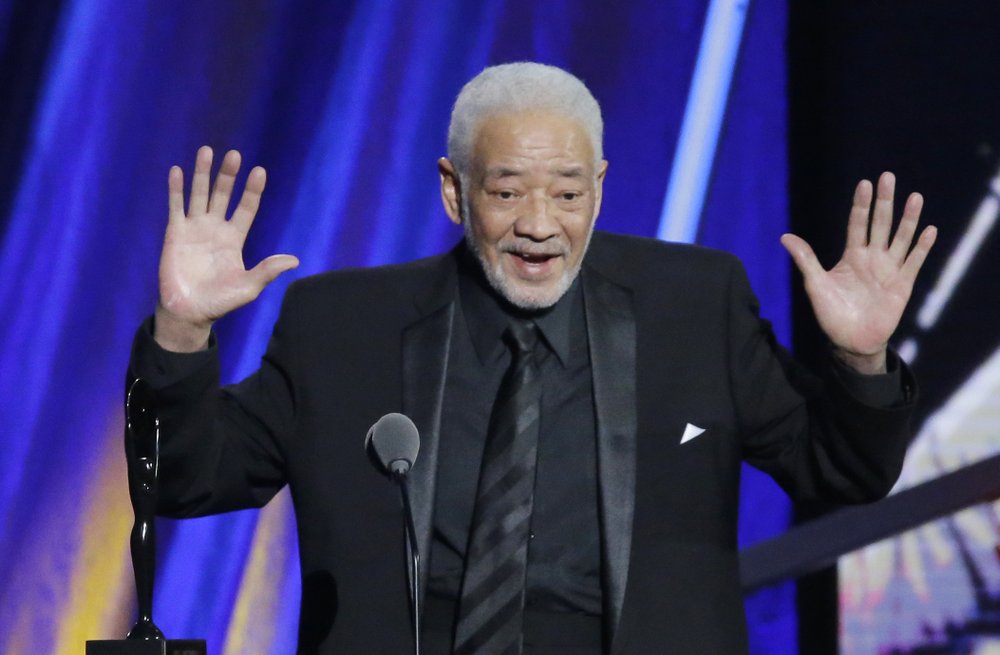
His death caused a torrent of appreciation on social media, including from former Obama adviser Valerie Jarrett, who said Withers’ music has been a cherished part of her life. “It added to my joy in the good times, and also gave me comfort and inspiration when I needed it most,” she tweeted. Singer José James said “we need his message of unity now more than ever” and Billy Dee Williams tweeted “your music cheered my heart and soothed my soul.”
“We lost a giant of songwriting today,” ASCAP President and Chairman Paul Williams said in a statement. “Bill Withers’ songs are among the most treasured and profound in the American songbook — universal in the way they touch people all over the world, transcending genre and generation. He was a beautiful man with a stunning sense of humor and a gift for truth.”
Withers, who overcame a childhood stutter, was born the last of six children in the coal mining town of Slab Fork, West Virginia. After his parents divorced when he was 3, Withers was raised by his mother’s family in nearby Beckley.
He joined the Navy at 17 and spent nine years in the service as an aircraft mechanic installing toilets. After his discharge, he moved to Los Angeles, worked at an aircraft parts factory, bought a guitar at a pawn shop and recorded demos of his tunes in hopes of landing a recording contract.
In 1971, signed to Sussex Records, he put out his first album, “Just As I Am,” with the legendary Booker T. Jones at the helm. It had the hits “Grandma’s Hands” and “Ain’t No Sunshine,” which was inspired by the Jack Lemmon film “Days of Wine and Roses.” He was photographed on the cover, smiling and holding his lunch pail.
“Ain’t No Sunshine” was originally released as the B-side of his debut single, “Harlem.” But radio DJs flipped the disc and the song climbed to No. 3 on the Billboard charts and spent a total of 16 weeks in the top 40.
Withers went on to generate more hits a year later with the inspirational “Lean on Me,” the menacing “Who Is He (and What Is He to You)” and the slinky “Use Me” on his second album, “Still Bill.”

Later would come the striking “ Lovely Day,” co-written with Skip Scarborough and featuring Withers holding the word “day” for almost 19 seconds, and “Just the Two Of Us,” co-written with Ralph MacDonald and William Salter. His “Live at Carnegie Hall” in 1973 made Rolling Stone’s 50 Greatest Live Albums of All Time.
“The hardest thing in songwriting is to be simple and yet profound. And Bill seemed to understand, intrinsically and instinctively, how to do that,” Sting said in “Still Bill,” a 2010 documentary of Withers.
But Withers’ career stalled when Sussex Records went bankrupt and he was scooped up by Columbia Records. He no longer had complete control over his music and chafed when it was suggested he do an Elvis cover. His new executives found Withers difficult.
None of his Columbia albums reached the Top 40 except for 1977’s “Menagerie,” which produced “Lovely Day.” (His hit duet with Grover Washington Jr. “Just the Two of Us” was on Washington’s label). Withers’ last album was 1985′s “Watching You Watching Me.”
Though his songs often dealt with relationships, Withers also wrote ones with social commentary, including “Better Off Dead” about an alcoholic’s suicide, and “I Can’t Write Left-Handed,” about an injured Vietnam War veteran.
He was awarded Grammys as a songwriter for “Ain’t No Sunshine” in 1971 and for “Just the Two Of Us” in 1981. In 1987, Bill received his ninth Grammy nomination and third Grammy as a songwriter for the re-recording of the 1972 hit “ Lean on Me” by Club Nouveau.
He was inducted into the Rock and Roll Hall of Fame in 2015 by Stevie Wonder. Withers thanked his wife as well as the R&B pioneers who helped his career like Ray Jackson, Al Bell and Booker T. Jones. He also got in a few jabs at the record industry, saying A&R stood for “antagonistic and redundant.” Withers also was inducted into the Songwriters Hall of Fame in 2005.
His music has been covered by such artists as Barbra Streisand, Michael Jackson, Aretha Franklin, Tom Jones, Linda Ronstadt, Paul McCartney, Sting, Johnny Mathis, Aaron Neville, Al Jarreau, Mick Jagger, Nancy Wilson, Diana Ross. His music has been sampled for BlackStreet’s “No Diggity,” Will Smith’s version of “ Just the Two Of Us, ” Black Eyed Peas’ “Bridging the Gap” and Twista’s “Sunshine.” The song “Lean on Me” was the title theme of a 1989 movie starring Morgan Freeman.
His songs are often used on the big screen, including “The Hangover,” “28 Days,” “American Beauty,” “Jerry Maguire,” “Crooklyn,” “Flight,” “Beauty Shop,” “The Secret Life of Pets” and “Flight.”
“I’m not a virtuoso, but I was able to write songs that people could identify with. I don’t think I’ve done bad for a guy from Slab Fork, West Virginia,” Withers told Rolling Stone in 2015.
He is survived by his wife, Marcia, and children, Todd and Kori.
jeudi 2 avril 2020
Sandy Anderson of 80s group Unlimited Touch dies from COVID-19 virus

In December of 1980, the New York-based sextet—featuring lead vocalists Audrey Wheeler and Stephanie James—burst on to the club scene in the United States with the scorching synth-funk/soul hybrid “I Hear Music in the Streets,” produced by Crown Heights Affair’s Raymond Reid and William Anderson (of no relation to Sandy). Within a month, the anthemic jam’s appeal had spread to R&B radio. Peaking at #6 on the club charts and making the top 40 of the soul listings, it quickly gained an international following—seeing successful releases in the UK, Canada, France, Germany, and The Netherlands.
Far from a one-off studio group, Unlimited Touch soon after released a self-titled full-length album on prominent disco label Prelude Records and followed “I Hear Music in the Streets” with the slightly slower, but equally funky and melodically dynamic, “Searching to Find the One.” The single surpassed the R&B peak of its predecessor, while a glowing B-side dancer, “In the Middle,” became a much-loved gem amongst disco, funk, and soul listeners over the next decade.
Unlimited Touch was downsized to a trio in 1983 due to difficult business circumstances, but Anderson remained on board. Entitled Yes, We’re Ready!, the group’s sophomore LP didn’t repeat the success of its first, but tracks such as “Good Loving” and the subsequent non-album single “Reach Out (Everlasting Lover)” eventually found their way on to several compilation albums. Concurrently, Sandy lent his defining style to a number of other records helmed by the Reid/Anderson production team, including albums on their MyDisc label by actor Darnell Williams, soul/blues vocalist Zinga Washington, and funk band Intensive Heat. He also played on popular singles ranging from Prelude labelmate France Joli’s “Gonna Get Over You” to Odyssey’s “Inside Out” and later, “All Nite,” a top-10 hit for Entouch featuring Keith Sweat.
Anderson’s stand-out bass-playing struck a hard-to-imitate balance of funk finesse and soulful smoothness. The irresistible bottom layer which he contributed to “I Hear Music in the Streets” provided the foundation for rapper Rampage’s 1997 #5 rap/#3 dance single, “Take It to the Streets” (notably bearing the song’s original vocal melody, resung by Billy Lawrence) and was also sampled by producer Sean “Puffy” Combs (aka Diddy) on Faith Evans’ top-10 1999 hit, “All Night Long.
Unlimited Touch recently reunited for the first time in decades to record a new version of “I Hear Music in the Streets,” as well as a new tune, for legendary producer Louie Vega’s upcoming Expansions in the NYC album. Since that time, group keyboardist Lenny Underwood has also been diagnosed with COVID-19. As this aggressive pandemic continues to plague talented entertainers around the globe, please keep the families of both Sandy and Lenny in your prayers.
Sandy Anderson left an indelible mark on dance-driven soul music at a time when many industry professionals wrote it off as a has-been fad. Adding a special depth that maintained the essence of disco while instilling ample doses of funk and soul, his bass skills were a fundamental part of the Unlimited Touch story which ultimately influenced many other artists in the field during the 1980s and onward.


.jpg)

.jpg)
+2013.jpg)
.jpg)


mercredi 1 avril 2020





Inscription à :
Articles (Atom)


